In Old Westbury, the School District Line Is the Real Property Line
September 17, 2026
September 17, 2026
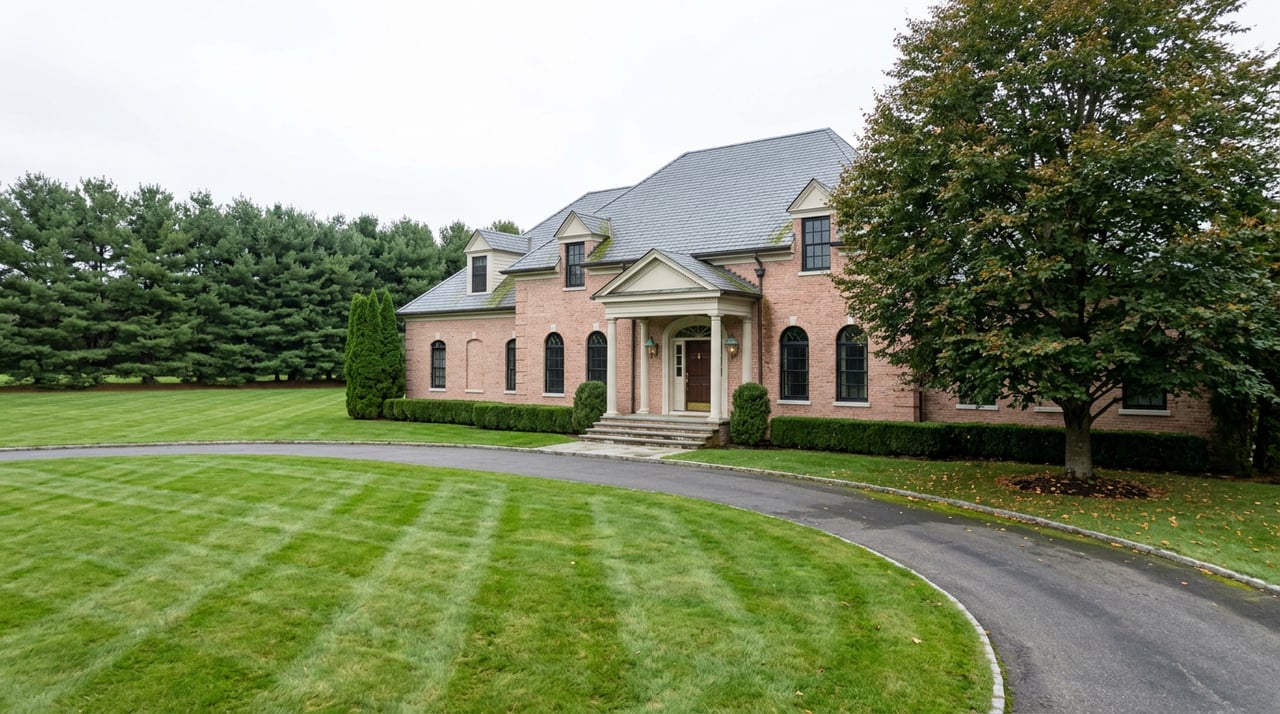
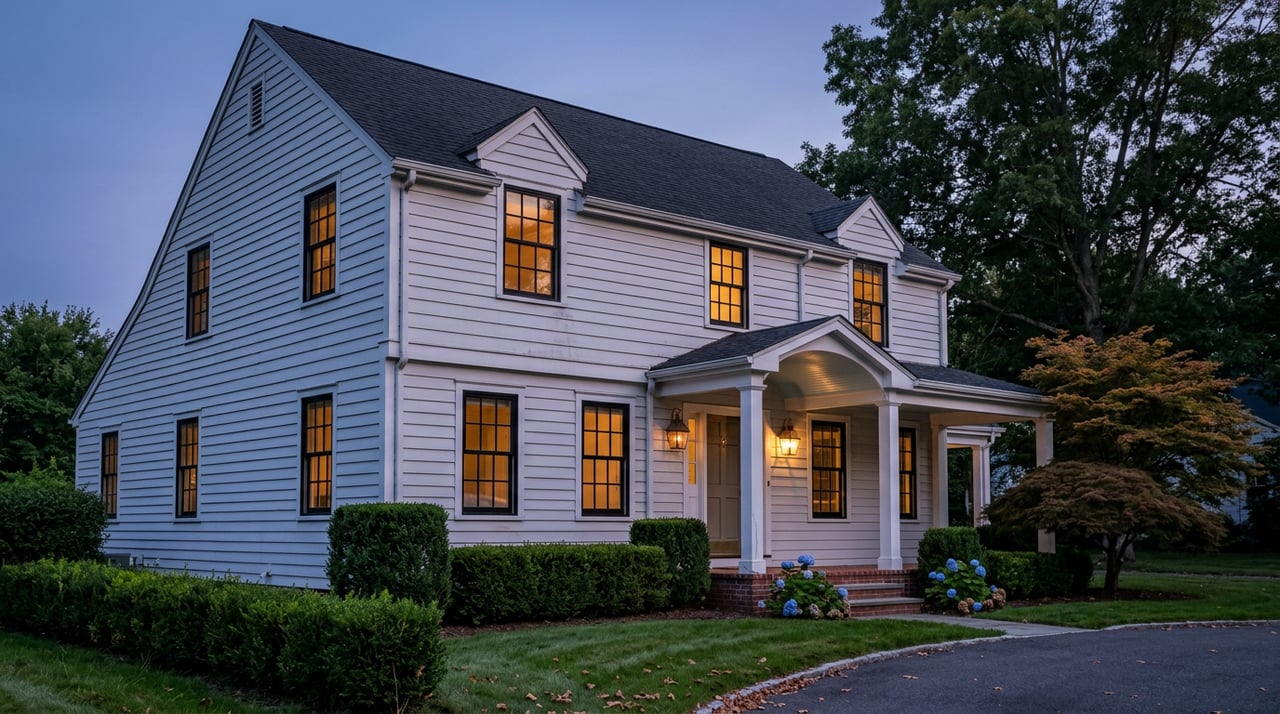
Two colonials sit across a cul-de-sac from each other in Old Westbury. Same era, same two-acre lots, same brick and cedar shake, same circular drives swept clean under old oaks. One lists several hundred thousand dollars above the other. A buyer touring both in one afternoon could be forgiven for assuming a pricing mistake. There isn't one. The houses are nearly identical. The line that separates their value runs somewhere underfoot, invisible on the ground and decisive on paper: a school district boundary.
That line, more than acreage, more than architecture, more than the age of the roof, is the variable doing the most work in Old Westbury's real estate market. Anyone comparing the village to its neighbors off a single median price on a portal is comparing the wrong number to the wrong thing, because Old Westbury isn't one market. It's four, stacked inside one zip code.
Old Westbury has no school system of its own. The village is split among four separate public districts: Jericho Union Free School District, East Williston Union Free School District, Roslyn Union Free School District, and Westbury Union Free School District. Each operates independently, with its own boundaries, tax rate, and academic record, and none of those boundaries lines up with a village limit or a zip code. They cut through Old Westbury itself.
Niche rates Jericho, East Williston, and Roslyn each at A-plus, placing them among the top ten public school districts in New York State, with Jericho ranked first in the state and Roslyn second. Westbury's district carries a C-plus rating on the same scale. Two houses can sit a few hundred yards apart and belong to districts on opposite ends of that range, and the address on the deed is the only thing that tells you which one.
| District | Niche Rating | Rank Context |
|---|---|---|
| Jericho UFSD | A+ | Ranked #1 among New York State districts |
| East Williston UFSD | A+ | Among the state's top 10 |
| Roslyn UFSD | A+ | Ranked #2 among New York State districts |
| Westbury UFSD | C+ | Below the other three serving the village |
Old Westbury's zoning removes most of the other variables that usually explain a price gap. The village requires minimum lot sizes of two to five acres depending on section, and permits no commercial development anywhere within its limits. There's no starter tier, no townhome cluster, no strip of smaller lots that would otherwise absorb buyers priced out of the biggest parcels. Every lot competes on similar scale. When acreage and architecture stop being the differentiator, whatever remains starts carrying more of the price.
What remains, consistently, is the district line. Homes that fall within Jericho or East Williston boundaries tend to command higher prices than comparable properties elsewhere in the village, even when the properties themselves are close to identical in size and condition. It isn't a subtle effect. Buyers searching Old Westbury by village name alone, without checking which of the four districts actually serves a specific address, are shopping four different markets as if they were one.
An acre in Old Westbury buys space. The line on the zoning map decides which classroom that space feeds into, and that line is the number that actually moves the price.
The village's zoning creates a second effect that compounds the first: very few homes change hands here in a given year. Public records tracking Old Westbury transactions over a recent twelve-month stretch counted 37 closed sales. In a market that thin, the published median isn't a stable read on value. It's a snapshot of whichever handful of homes happened to sell that month.
That volatility shows up directly in the numbers. Redfin's tracking for March 2026 put Old Westbury's median sale price at $3.1 million, up 40.9% from the same month a year earlier. Over that same stretch, the median sale price per square foot actually fell 23.6% year over year. A median that jumps 41% while price per square foot drops nearly a quarter isn't describing a village that suddenly got 41% more valuable. It's describing a shift in which homes happened to close: a stretch with more multi-acre estates changing hands, or fewer of them, can swing the headline figure without a single homeowner's equity actually moving that much.
Zillow's separate estimate, built from its own valuation model rather than actual closed sales, put the village's typical home value at roughly $2.31 million, up just 1.7% over the same year. The two figures measure different things. One tracks the mix of what happened to sell in a given month. The other smooths across every home whether it traded or not. In a market with steady volume, they'd move roughly together. In Old Westbury, they diverge by close to a million dollars, which is itself the clearest evidence that the village-wide median is not a number a buyer should lean on without asking what sold to produce it.
The same thinness shows up in how long homes sit. Redfin's village-wide figure puts the median time to sale at 39 days, a number that would suggest a fairly brisk market. But sources tracking the higher end of Old Westbury listings specifically report average days on market for higher-priced properties running anywhere from 90 to well over 200 days.
Both figures are accurate. They're describing different segments blended into one number. A smaller share of lower-priced entry properties, typically starting around $1.2 million to $1.5 million on the smaller end of the lot spectrum, move faster and pull the blended median down. The multi-million dollar estates that make up much of the village's inventory take considerably longer to find a buyer. A shopper who reads "39 days" and expects that pace to apply to a $4 million listing will misjudge how firm to hold on price, or how long to expect a negotiation to run.
For a buyer comparing Old Westbury to other North Shore villages, the practical takeaway isn't to distrust every number. It's to ask which segment a number describes before using it.
Before writing an offer, confirm the exact school district serving that specific address rather than assuming based on the village name. Boundaries can split a single street, and a listing advertising Old Westbury doesn't guarantee Jericho or Roslyn schools. Expect the timeline to match the price tier, not the village average: a listing in the multi-million dollar range is more likely to move at the 90-to-200-day pace than the blended 39-day figure. And build daily life into the decision alongside the school line, since Old Westbury's zoning permits no commercial district at all. The Old Westbury Diner is the only restaurant inside village limits. For anything else, from a dinner reservation to a stop at the Milleridge Inn in neighboring Jericho, residents already drive a few minutes to Roslyn, Westbury, or Jericho as a matter of routine, not inconvenience.
Can a buyer choose which school district serves an Old Westbury address? No. District assignment is fixed by the village's zoning boundaries and the specific parcel, not by buyer preference. A small number of listings sit close enough to a boundary that they're marketed with a choice between two adjacent districts, but that's specific to the parcel and should be confirmed with the district directly before assuming it applies.
Why is there only one restaurant in the entire village? Old Westbury's zoning code contains no commercial district, so restaurants, retail, and offices aren't permitted outside narrow exceptions. The Old Westbury Diner is that exception. Everything else, from dinner reservations to weekly errands, happens a short drive away in Roslyn, Westbury, or Jericho.
Does a jump in the median price mean the market got more competitive? Not necessarily, and not in a village where well under 40 homes typically close in a year. A single high-end estate sale can swing the median sharply without reflecting any real change in what buyers are willing to pay for a comparable home. The safer read is the price for homes actually similar to the one being considered, not the village-wide figure.
Old Westbury rewards a buyer willing to look past the single number on the listing page and ask which district, which price tier, and which few transactions actually produced it. That's the kind of read that comes from watching a village closely over time, not from a portal's monthly snapshot. If you're weighing Old Westbury against other North Shore villages and want to know what a specific address's number actually means, Limor Karudo & Elimor Kochavi can walk through it street by street. Reach Out.
Stay up to date on the latest real estate trends.
As lifelong friends and trusted real estate partners, we combine creative vision, technical expertise, and genuine care to deliver a thoughtful, relationship-driven experience that helps every client feel confident from beginning to end.

LIMOR KARUDO AND ELIMOR KOCHAVI TEAM
[email protected]
LIMOR KARUDO: (516) 263-7075
ELIMOR KOCHAVI: (516) 225-9146
ADDRESS
49 BRYANT AVE
ROSLYN, NY 11576