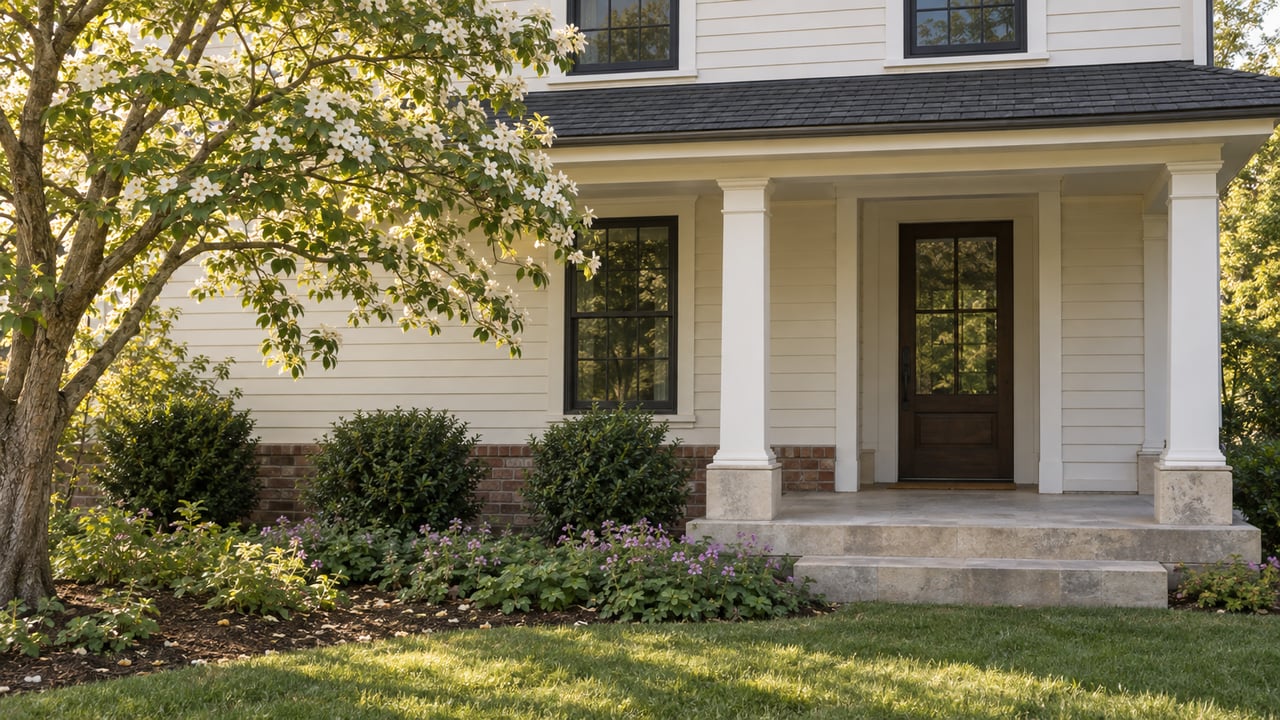
Clark Botanic Garden in Albertson: Fall Events to Explore
October 1, 2026
October 1, 2026
"An enchanted forest... right down the street," one visitor wrote about Clark Botanic Garden, and for most of the year that description undersells how uneventful the place actually is. Walk the loop path on a Tuesday afternoon in September and you'll find retirees on benches, a jogger cutting through on the way to somewhere else, maybe a toddler chasing a duck near one of the two ponds. Nothing about it announces itself. There's no sign on Willis Avenue pointing you toward a can't-miss attraction. The garden just sits there on I.U. Willets Road, open, free, and largely unbothered.
Then October arrives, and the garden's two-part Halloween program draws more than a hundred costumed actors, food vendors, and families looking to get scared on purpose. That contrast, quiet garden most of the year, packed garden for one specific weekend, tells you more about how this neighborhood actually gathers than any list of restaurants or shops could.
Clark Botanic Garden opened in 1969 on the former estate of Grenville Clark, an attorney and adviser to President Franklin D. Roosevelt. The garden design came from Alice Recknagel Ireys, and the Town of North Hempstead now owns the property while a nonprofit, the Fanny Dwight Clark Memorial Garden, Inc., handles day-to-day operations and programming.
The plant collection is bigger than the acreage suggests. The garden holds roughly 5,000 species and more than 1,000 labeled trees, shrubs, and garden plants, spread across specimen areas that include roses, daylilies, wetland plants, rock garden plants, herbs, butterfly plants, and medicinal plants. There are two ponds, a small gift shop, and a community gardening plot tucked into the grounds.
Admission is free, with donations accepted at the gift shop. The garden is open seven days a week all year, running 10 a.m. to 6 p.m. from April through October and 10 a.m. to 4 p.m. from November through March. None of that requires a ticket, a reservation, or advance planning. You just walk in.
Every October, that pattern breaks on purpose. The garden hosts a two-part Halloween tradition that has run for years under sponsorship from NEFCU and the Town of North Hempstead: an evening Spooky Walk and a gentler, daytime Not-So-Spooky Walk.
The evening version turns the same paths that carried joggers and dog walkers all summer into a haunted trail. More than 100 actors dressed as ghosts, vampires, and other Halloween regulars populate the grounds, with live music and food vendors running alongside the scares. The daytime Not-So-Spooky Walk is built for younger kids and anyone who'd rather skip the jump scares. It's added an animal show, crafts, face painting, and a dance party in past years, and costumes are encouraged rather than required.
The exact weekend moves from year to year, and admission has historically run a few dollars per person, so the smart move if you're planning around it is to check clarkbotanic.org closer to the date rather than penciling in a specific weekend now. What doesn't move is the basic shape of the event. Same garden, same format, different costumes every fall.
Halloween isn't the only fixed point on the garden's calendar. The nonprofit auxiliary runs plant sales in both spring and fall, with the spring sale typically landing on Mother's Day weekend and staffed by master gardeners who help residents pick out annuals, perennials, herbs, and native plants. Proceeds from both sales go directly toward maintaining the garden itself, which is one reason the place has stayed free to enter for as long as most residents can remember.
The Children's Garden program adds another recurring date. Kids in the program learn to plant and weed a vegetable plot over the growing season, take home what they grow, and close out the year with a costumed Harvest Parade followed by a barbecue. Regular visitors have also described a Winter Wonderland light display around Christmas, giving the garden a fourth season that looks nothing like the other three.
Taken together, these aren't isolated events so much as a repeating civic calendar. Spring plant sale. Summer vegetable garden. October's Halloween events. Winter lights. None of them depend on a new business opening or an old one closing to happen. They happen because the garden runs the same handful of seasonal events every year, and that steadiness gives the calendar a rhythm neighbors can plan around.
Here's a detail that surprises even people who've been coming to the garden for years. Despite the Albertson mailing address on every piece of signage and every event listing, the garden's actual footprint sits within the boundary of the neighboring hamlet, Roslyn Heights.
Nobody treats this as a problem. Nobody at the Spooky Walk checks which side of an invisible line their car is parked on before deciding whether they belong there. The garden's mailing address says one thing and its property line says another, and the only people who ever notice are the ones curious enough to look it up. Everyone else just calls it their garden, because that's functionally what it is regardless of which hamlet's name appears on the mail.
That's the actual pattern here. A twelve-acre plot with a slightly mismatched address has become the one place in the area that reliably brings people out of their houses for the same events every year, not because it's flashy, but because it keeps showing up exactly when it said it would.
If you're already marking your calendar for this year's Spooky Walk, or you just want to know what else is blooming in the neighborhood, Limor Karudo & Elimor Kochavi would love to hear from you. Reach Out.
Stay up to date on the latest real estate trends.
As lifelong friends and trusted real estate partners, we combine creative vision, technical expertise, and genuine care to deliver a thoughtful, relationship-driven experience that helps every client feel confident from beginning to end.
LIMOR KARUDO AND ELIMOR KOCHAVI TEAM
[email protected]
LIMOR KARUDO: (516) 263-7075
ELIMOR KOCHAVI: (516) 225-9146
ADDRESS
49 BRYANT AVE
ROSLYN, NY 11576